|
Path of the 5th Armored Division I would eventually like to finish the entire route (ambitious, I know) and put this together along with all the names of the towns and submit it to the 5AD website. I just wish I could get it done in time for the benefit of some of the veterans who are still alive. For now, I'm glad to have been able to see what I did.
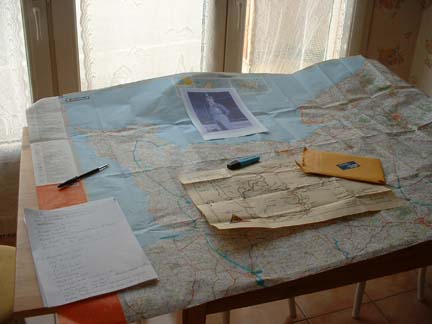
It all started with a plan at home.
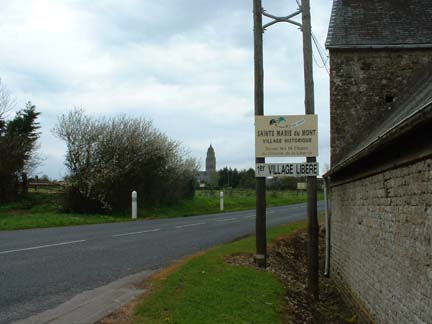
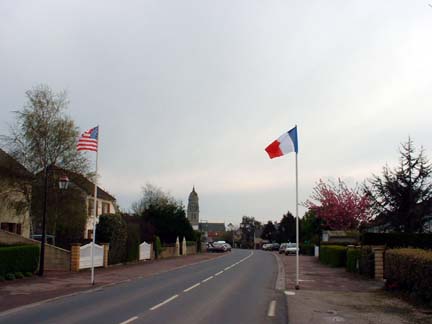
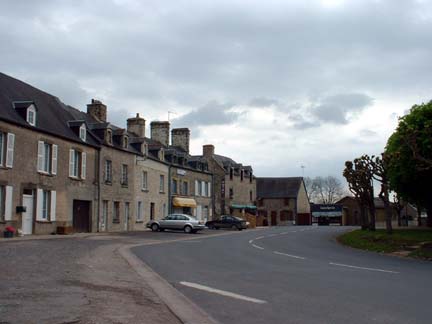
Ste. Marie du Mont was the first village liberated by the American troops after landing at Utah Beach on D-Day. Daddy's Company followed this route.
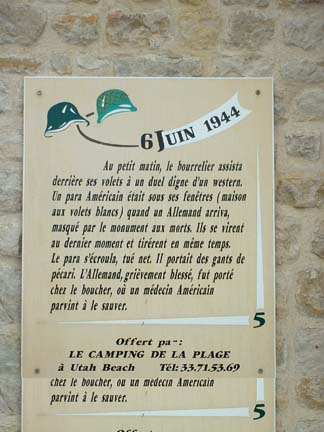
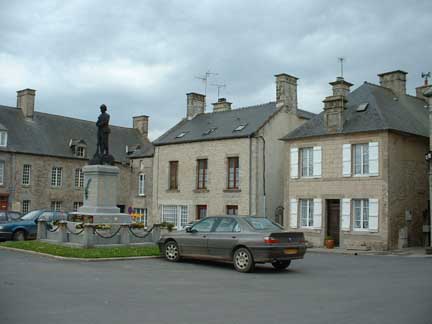
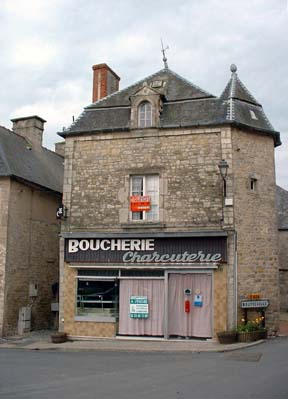
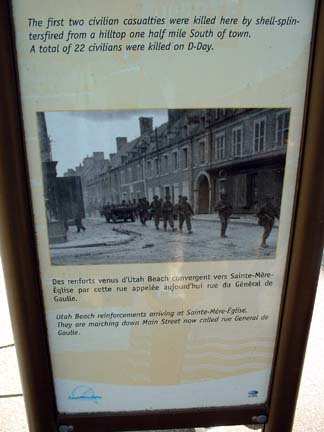
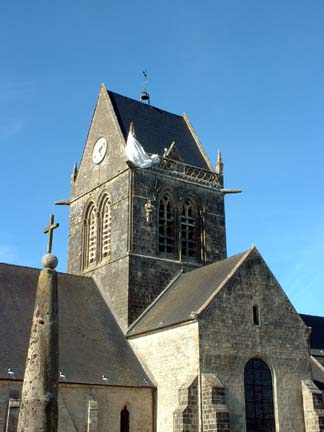
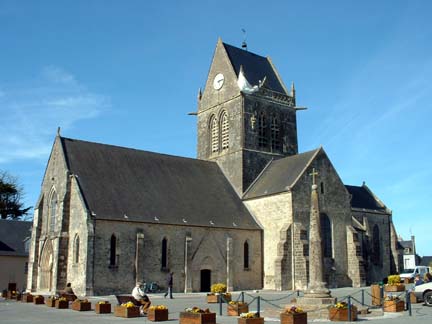
Ste. Marie du Mont. This sign above tells the story of an American paratrooper who was below the window of the house with the white shutters. A German soldier arrived, hidden by the statue in the square. They saw each other at the same moment and shot at the same time. The American was killed. The German was gravely injured and was held at the Boucherie, where an American doctor came and saved his life.
We stopped to eat and these goats were beside the restaurant. Emily had fun feeding them dandelions.
We saw a lot of Norman countryside.
...
and Ste. Mere Eglise. Part of the 'reinforcements' mentioned on the sign could
have included Daddy.
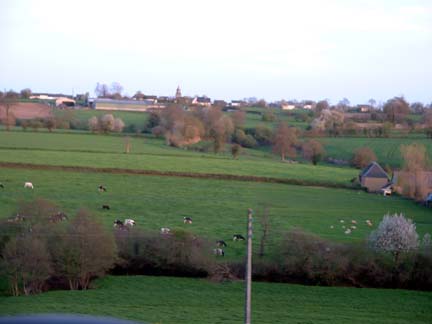
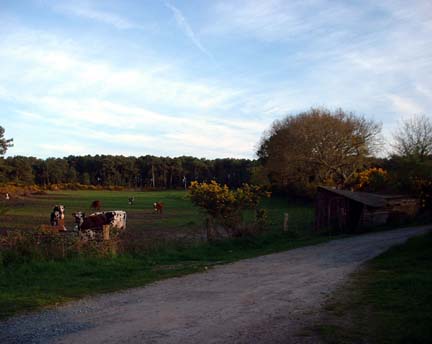
Black and white spotted cows, sheep and fruit orchards are a common sight in this part of the country.
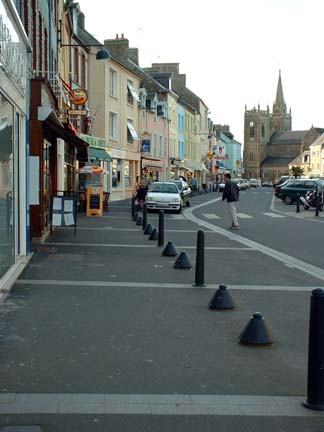
Valognes
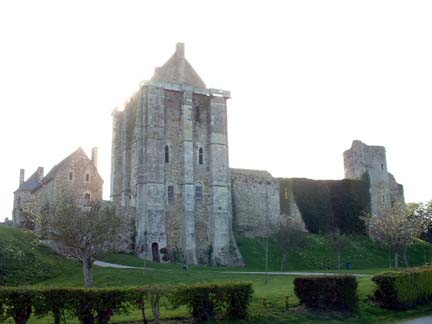
Daddy would have seen this abbey at St. Sauveur that sits alongside the road. What would he have thought?
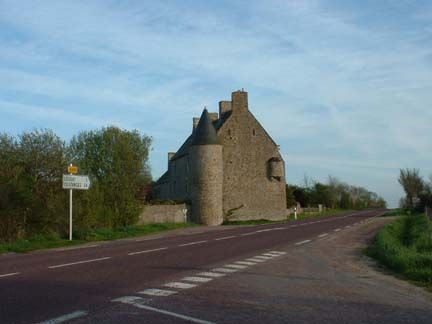
He would have seen this on the road near Lessay
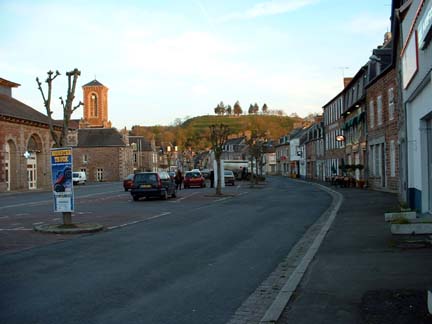
Using the military maps, we planned a route along the same path of the 5AD. The roads are no doubt the same they would have used, and the older buildings would have been there. I don't suppose the Monster Trucks sign (left) would have been there ... I have never seen one of these in France!
on the road
Lots of farmland
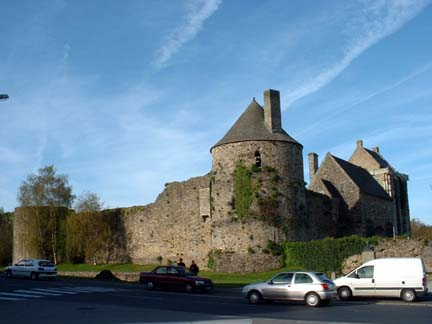
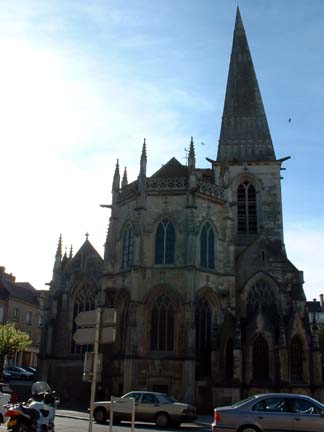
Did this abbey get a passing glance?
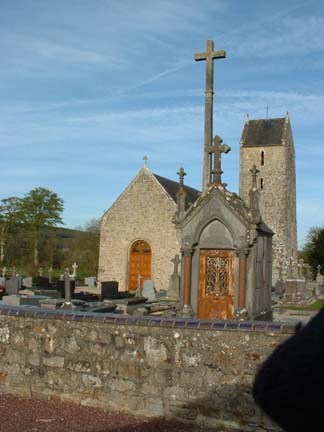
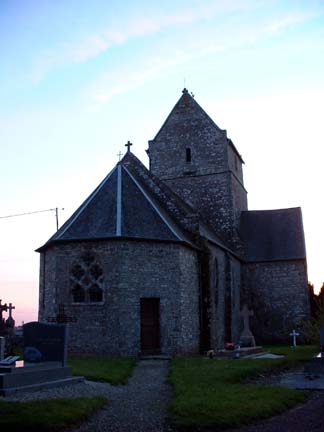
Or this church?
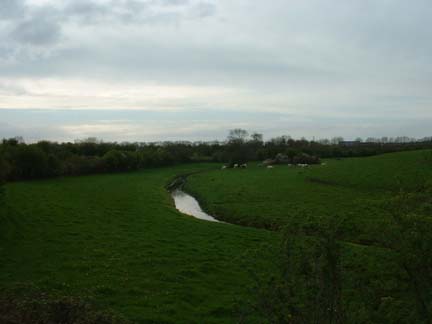
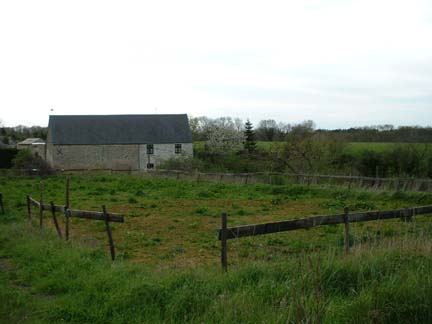
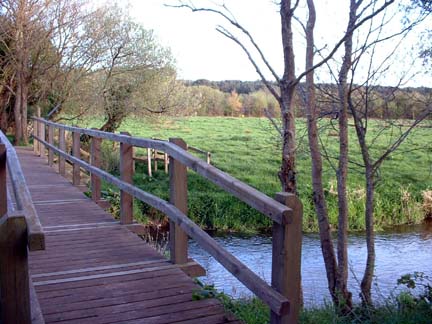
According to the the history on the 5AD website, they set up camp around this area near Lessay. Maybe near the river?
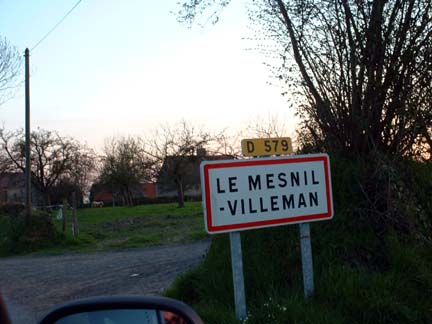
This
was the last village we were able to visit since it was getting dark. It was also
difficult to find. This was where they set up camp for a while, which could explain
that they would have ventured off main roads.
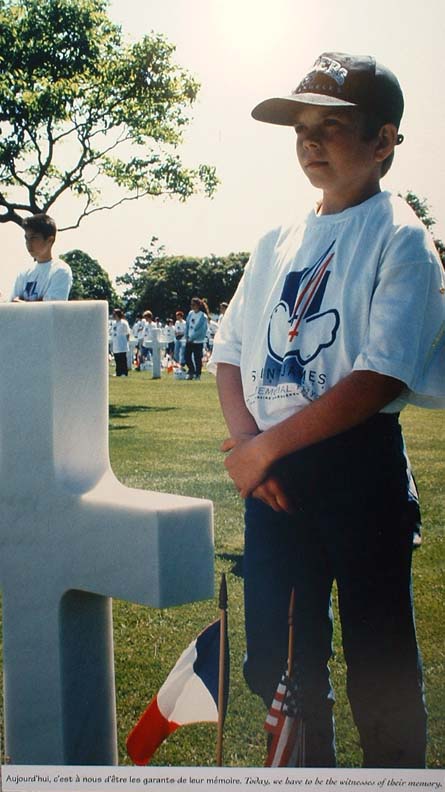
'Today we have to be the witnesses of their memory.' Every year
on the D-day Anniversary, a French flag and an American flag is place on each
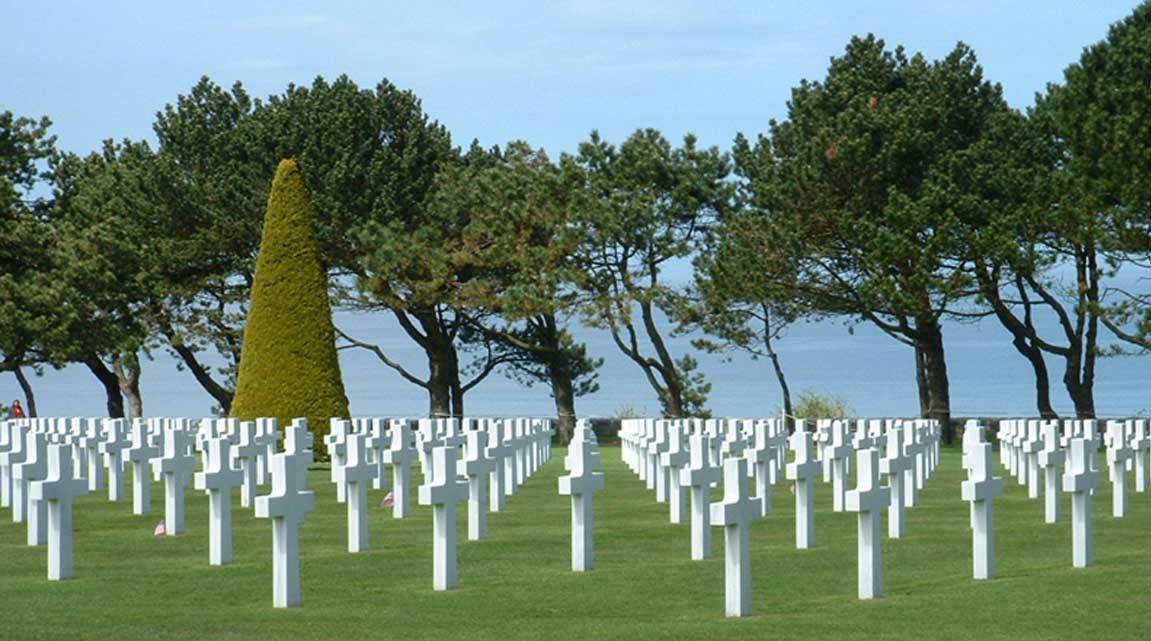
of the 10,000 graves in the American Cemetery beside the beach at Colleville-sur-mer.
Some soldiers were buried where they fell ... brothers, fathers and sons, 4 women,
and many known only to God.
"The
man who has no sense of history, is like a man who has no ears or eyes."
|